
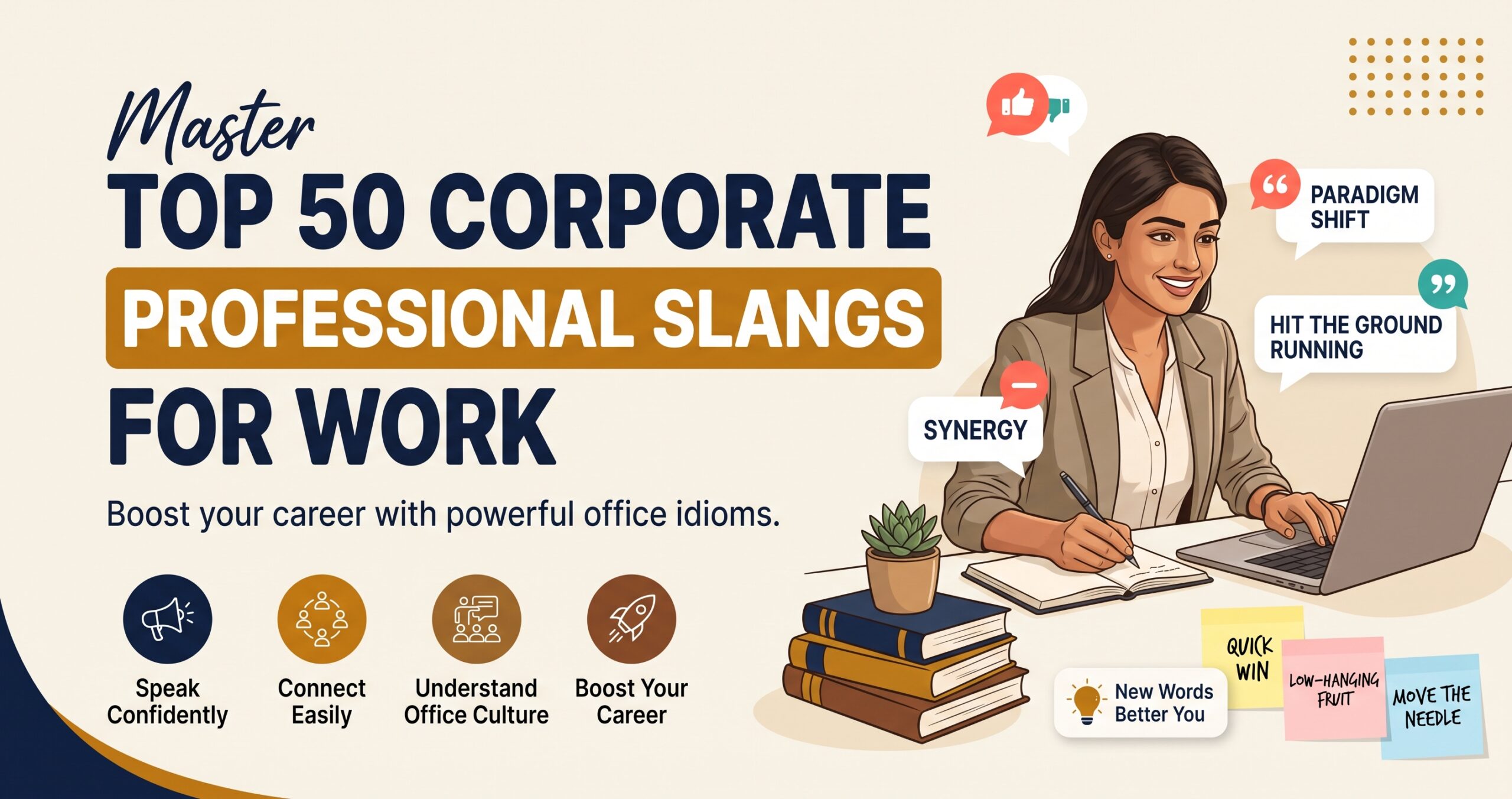
I know exactly how confusing it feels to sit in a meeting and hear someone say they need to “circle back.” When you first start working, the language feels like a secret code. Textbooks teach you proper grammar but they completely skip over the workplace Lingo people use every day.
You might have perfect English skills but still feel lost during a team call. Do not worry at all! I am going to translate this confusing corporate slang into plain English for you. Learning this slang for business will help you feel confident and included at work.
Let us jump right in and decode these phrases together so you can start talking like a pro.
Section 1: Common Meeting Jargon
1. Circle Back
- Meaning: To discuss a topic later after you gather more information.
- Example: “We don’t have the final numbers yet, so let’s circle back to the budget discussion next week.”
- How to use it: Use this when a meeting gets off track. It is a polite way to pause a conversation without ignoring the other person.
2. Touch Base
- Meaning: To briefly contact someone for a quick update.
- Example: “I will touch base with you tomorrow morning to see how the client meeting went.”
- How to use it: This is perfect for quick check-ins. It tells your coworker the conversation will be fast and painless.
3. Take it Offline
- Meaning: To discuss a private topic outside of the current group meeting.
- Example: “That is a great point, but let’s take it offline so we can stick to the agenda.”
- How to use it: Say this when two people are talking too much about a specific detail that does not involve the rest of the team.
4. Hard Stop
- Meaning: A specific time when you absolutely must leave a meeting.
- Example: “I have a hard stop at 2:00 PM, so let’s make sure we reach a decision before then.”
- How to use it: Warn people at the very beginning of the meeting if you have a hard stop. It helps everyone respect your time.
5. On the Same Page
- Meaning: When everyone agrees or understands a situation the same way.
- Example: “Before we sign the contract, I want to make sure we are all on the same page regarding the deadline.”
- How to use it: Ask this at the end of a big discussion. It prevents mistakes and miscommunication later on.
Section 2: Productivity Terms
6. Bandwidth
- Meaning: The time or mental energy you have available for a task.
- Example: “I would love to help with the new campaign, but I don’t have the bandwidth this month.”
- How to use it: This is the best professional way to say you are too busy. It sounds much better than just saying no.
7. Low-Hanging Fruit
- Meaning: Easy tasks that give you quick results.
- Example: “Fixing the spelling errors on the website is low-hanging fruit that we can handle today.”
- How to use it: Point these out when your team needs a quick win to build momentum.
8. Move the Needle
- Meaning: To make noticeable progress toward a big goal.
- Example: “We need a social media strategy that will actually move the needle on our engagement rates.”
- How to use it: Use this when you want people to stop focusing on tiny details and look at the big impact.
9. Deep Dive
- Meaning: A very detailed look into a specific topic or problem.
- Example: “Management wants us to do a deep dive into the reasons why our subscription numbers dropped.”
- How to use it: Suggest this when a quick glance is not enough and you need to solve a complex issue.
10. On My Radar
- Meaning: Being aware of a task that you need to do in the future.
- Example: “The year-end audit is definitely on my radar, and I have already started preparing the files.”
- How to use it: Tell your boss this to reassure them you have not forgotten about an upcoming project.
11. Bring to the Table
- Meaning: The specific skills or value you offer to a team.
- Example: “She is a great hire because she brings over ten years of international experience to the table.”
- How to use it: Use this phrase when praising a coworker or selling your own skills in an interview.
12. Game Changer
- Meaning: A new idea or tool that completely changes how you work.
- Example: “The launch of this AI tool is a total game changer for our content production team.”
- How to use it: Save this for things that actually make a massive difference so the phrase keeps its power.
13. Scalable
- Meaning: A process that can grow easily as the business gets bigger.
- Example: “Our current cloud storage solution is highly scalable as the company grows.”
- How to use it: Investors and managers love this word. Use it when presenting long-term business plans.
14. Slammed
- Meaning: Being extremely busy with a heavy workload.
- Example: “I am sorry I could not reply to your email sooner. I have been absolutely slammed all week.”
- How to use it: This is slightly informal. Use it with close coworkers rather than the CEO.
15. Pivot
- Meaning: To quickly change your business strategy when things are not working.
- Example: “Our initial product did not get much interest, so we decided to pivot toward a different target audience.”
- How to use it: Use this to frame a failure as a smart strategic change of direction.
16. Workflow
- Meaning: The exact steps a project goes through from start to finish.
- Example: “We need to optimize our workflow to reduce the time it takes to approve new designs.”
- How to use it: Talk about this when a project feels messy and you need better organization.
Section 3: Strategy Words
17. Alignment
- Meaning: Agreement and cooperation between different teams.
- Example: “We need to ensure alignment between the marketing and sales departments before the product launch.”
- How to use it: Bring this up when two departments are fighting or confused about a shared goal.
18. Synergy
- Meaning: The magic that happens when a group works better together than alone.
- Example: “The synergy between our design team and the developers resulted in a flawless mobile app.”
- How to use it: Be careful with this one. Some people think it sounds a bit cliché so use it sparingly to praise great teamwork.
19. Buy-in
- Meaning: Getting support and approval from someone to start a plan.
- Example: “I need to get the CEO’s buy-in before we commit to this new software subscription.”
- How to use it: Always secure this from your boss before spending company money or making big changes.
20. Stakeholders
- Meaning: Anyone who cares about or is affected by a project.
- Example: “We must send a weekly report to all stakeholders to keep them updated on our progress.”
- How to use it: Use this to remind your team that other people are waiting on your results.
21. Best Practice
- Meaning: The smartest and most accepted way to do a specific task.
- Example: “Documenting every meeting is a best practice that helps avoid confusion later on.”
- How to use it: Say this when you want to gently correct someone who is doing something the hard way.
22. Think Outside the Box
- Meaning: To solve a problem using creative and new ideas.
- Example: “If we want to beat our competitors, we need to think outside the box with our advertising.”
- How to use it: Challenge your team with this phrase during brainstorming sessions when ideas get boring.
23. Keep Someone in the Loop
- Meaning: To keep someone updated on what is happening.
- Example: “Please keep me in the loop regarding any changes the client requests during the call.”
- How to use it: Say this when you want updates but do not want to do the actual work yourself.
24. Value Add
- Meaning: An extra feature that makes a product or service better.
- Example: “Providing a free training session for the client is a significant value add for our package.”
- How to use it: Point this out when you want to show why your work is special and worth the money.
25. Core Competency
- Meaning: The main strength or primary skill of a person or company.
- Example: “Content writing is our core competency, so let’s focus on that rather than coding.”
- How to use it: Use this to keep your team focused on what they do best instead of getting distracted.
26. Leverage
- Meaning: Using a resource you already have to get a bigger advantage.
- Example: “We can leverage our strong social media presence to promote the new organic product.”
- How to use it: This sounds very professional. Use it when suggesting a smart low-cost marketing idea.
27. Heads Up
- Meaning: A quick warning about something happening soon.
- Example: “Just a heads up, the office will be closed this Friday for scheduled maintenance.”
- How to use it: Send this in a quick chat message to save a coworker from making a mistake.
28. Ballpark Figure
- Meaning: A rough guess or estimate of a number.
- Example: “I don’t need the exact cost right now. Just give me a ballpark figure for the budget.”
- How to use it: Ask for this when you just need a general idea and do not want someone to spend hours doing exact math.
29. Pick Your Brain
- Meaning: To ask an expert for their advice or ideas.
- Example: “Do you have ten minutes? I would love to pick your brain about your experience with SEO.”
- How to use it: This is a very flattering way to ask a senior coworker for help or mentorship.
Section 4: Measuring Success
30. Back to the Drawing Board
- Meaning: Starting over completely because an idea failed.
- Example: “The client rejected our initial design, so it is back to the drawing board for the creative team.”
- How to use it: Say this with a positive attitude to show you are ready to try again without being upset.
31. Drill Down
- Meaning: To look very closely at the small details of some data.
- Example: “We need to drill down into the analytics to understand why our conversion rate is falling.”
- How to use it: Suggest this when a report is too vague and you need to find the root cause of an issue.
32. Loop In
- Meaning: To add a new person into an email chain or project.
- Example: “Let’s loop in the legal department to make sure this contract is safe to sign.”
- How to use it: Use this when a project suddenly needs a specific expert opinion.
33. Big Picture
- Meaning: The overall vision instead of the tiny details.
- Example: “Don’t get bogged down in small details. Remember the big picture is to expand globally.”
- How to use it: Say this when your team is arguing about small things and forgetting the main goal.
34. Win-Win
- Meaning: A deal where both sides get exactly what they want.
- Example: “This partnership is a win-win. They get our expertise and we get their technology.”
- How to use it: Bring this up during negotiations to show you want a fair partnership.
35. KPI (Key Performance Indicator)
- Meaning: The exact numbers you track to see if you are succeeding.
- Example: “Our primary KPI for this month is to increase website traffic by 20%.”
- How to use it: Always ask what the KPIs are before starting a new job. It tells you exactly how your boss will judge your work.
36. ROI (Return on Investment)
- Meaning: How much profit you make compared to what you spent.
- Example: “The ROI on our Facebook ads was much higher than we originally anticipated.”
- How to use it: You must talk about this if you are asking your company to spend money on anything.
37. North Star
- Meaning: The big guiding goal that directs all company choices.
- Example: “Customer satisfaction should be our North Star for every decision we make this year.”
- How to use it: Use this inspiring phrase during big company meetings to keep everyone motivated.
38. Deliverables
- Meaning: The actual files or reports you hand over to the client.
- Example: “The project deliverables include a full report and a 10-minute video presentation.”
- How to use it: Always get a clear list of these in writing so a client cannot demand extra free work later.
39. Pain Point
- Meaning: A specific frustration that your customer is dealing with.
- Example: “Slow shipping is the biggest pain point for our customers right now.”
- How to use it: Focus on these when writing sales copy. If you fix their pain, they will buy your product.
40. Benchmark
- Meaning: A standard number you use to compare your current success.
- Example: “We should use last year’s sales as a benchmark for our current quarterly performance.”
- How to use it: Set these early on so you have a realistic way to measure if you are actually improving.
41. Bottleneck
- Meaning: One slow step that holds up the entire project.
- Example: “The slow approval process from management is a major bottleneck in our production line.”
- How to use it: Point this out carefully to help speed up a team process without sounding like you are complaining.
42. Due Diligence
- Meaning: Doing deep research before signing a deal.
- Example: “We must perform due diligence before signing a contract with a new international supplier.”
- How to use it: Say this to remind your team not to rush into a legally binding agreement.
43. Elevator Pitch
- Meaning: A short 30-second speech that explains your business perfectly.
- Example: “Make sure your elevator pitch is ready for the networking event tonight.”
- How to use it: Always have this memorized. You never know who you will meet in the office lobby.
44. In the Pipeline
- Meaning: Projects that are being worked on right now for the future.
- Example: “We have several new website features in the pipeline that will be released next quarter.”
- How to use it: Share this with unhappy clients to prove that better things are coming soon.
45. Pushback
- Meaning: When people resist or argue against your new idea.
- Example: “We received some pushback from the team regarding the new office working hours.”
- How to use it: Use this gentle word instead of saying everyone hated my idea.
46. Streamline
- Meaning: To make a messy system simple and fast.
- Example: “We need to streamline our onboarding process to save time for new hires.”
- How to use it: Suggest this when a daily task is taking way too much of your time.
47. Up to Speed
- Meaning: Knowing all the latest facts about a project.
- Example: “Can you spend an hour with Sarah to get her up to speed on the new project details?”
- How to use it: Say this when a new person joins your team and needs a quick training session.
48. Go the Extra Mile
- Meaning: Doing more work than anyone asked you to do.
- Example: “Our team is always willing to go the extra mile to ensure client satisfaction.”
- How to use it: Bosses love to hear this. Use it to describe your work ethic during an interview.
49. Bottom Line
- Meaning: The final profit or the single most important fact.
- Example: “The bottom line is that we need to reduce costs if we want to stay profitable.”
- How to use it: Say this when you need to end a long argument and state the plain truth.
50. At the End of the Day
- Meaning: The final summary after you think about everything.
- Example: “At the end of the day, our goal is to provide the best value to our users.”
- How to use it: This is a great transition phrase to wrap up a long meeting on a positive note.
Many of these office terms are actually phrasal verbs, which are super fun to learn!
How to Use Office Slang Naturally
Knowing what slang for professional environments means is just the first step. The real trick is knowing exactly when to say it out loud. These terms exist to make office chats faster. You just have to be careful not to use them too much.
If you pack every single sentence with workplace lingo, you will sound like a robot. The best secret is to sit back and listen to your team first. Notice which phrases your manager loves to use and slowly add those into your own chats.
Using this language right shows people you belong in that professional space. It proves you understand the office slang culture. Start small, try out a few words on your next call, and watch how quickly you start blending right in!
If you feel like you keep repeating yourself in meetings, grabbing a few new synonyms and antonyms will completely change how you speak.
Frequently Asked Questions
Can I use business jargon during a job interview?
I would actually keep it simple during an interview. You want to sound professional and clear above all else. Once you get the job and hear how the team naturally talks, you can start blending in those fun office phrases.
What happens if I use an office phrase completely wrong?
Please do not panic! We all make funny mistakes when learning a new work culture. Just laugh it off and ask your team what the word actually means to them. People love helping a new coworker who is honest and eager to learn.
What should I say if my boss uses office jargon I don’t understand?
You never have to pretend you know everything. Just smile and politely ask them to explain what they mean. It shows you are paying close attention. That is way better than guessing and doing the actual work wrong!
Do remote teams use the same terms as in-person offices?
Yes, they absolutely do! You might hear words like “bandwidth” and “touch base” even more on your daily video calls. Since remote teams talk a lot on typing apps, using these short terms saves everyone a ton of time.
Leave a Comment